
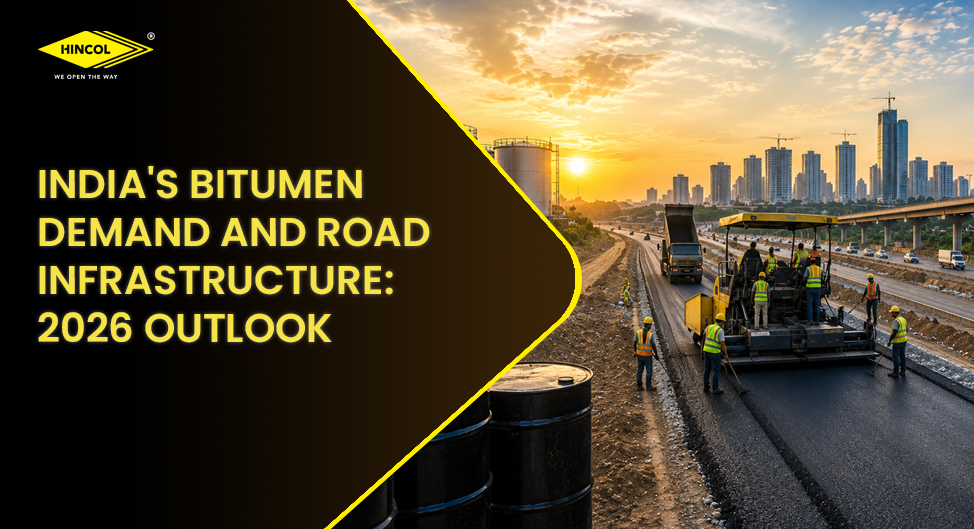
India’s Bitumen Demand and Road Infrastructure: 2026 Outlook
India is building roads at a historic pace. Behind every kilometre lies a growing demand for one essential material: bitumen. Understanding this demand helps contractors, suppliers, and planners prepare for what lies ahead.
This article looks at India’s bitumen demand and road infrastructure heading into 2026. We cover the market size, the drivers of growth, the import challenge, and what it all means for the road-building industry.
India’s Massive Road Network
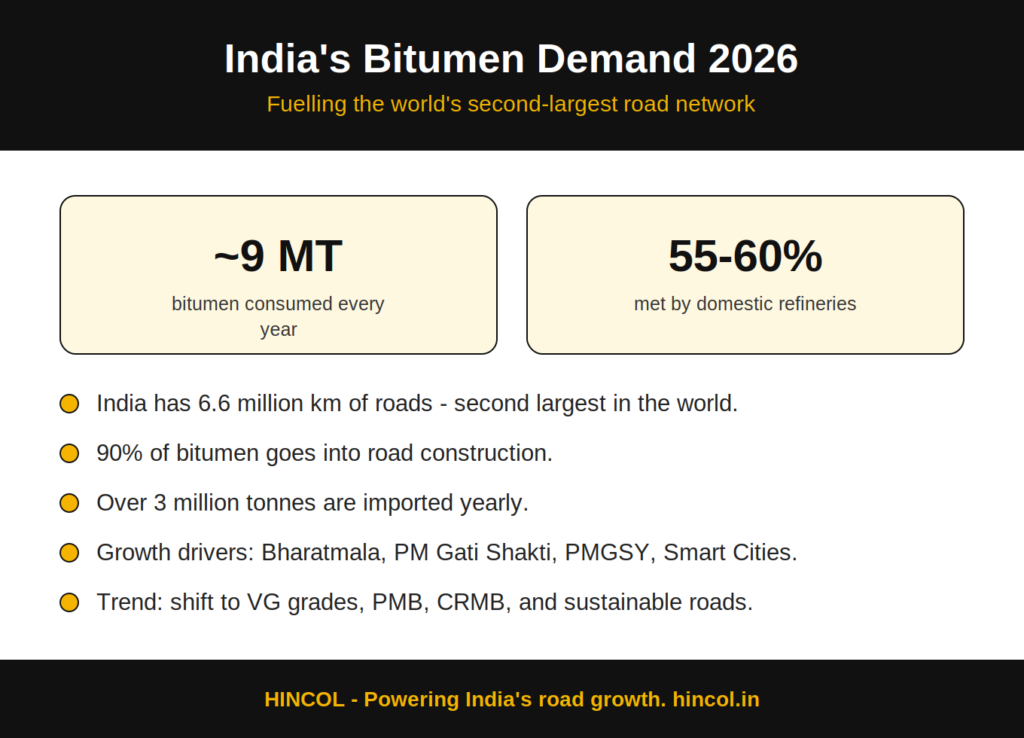
India has the second-largest road network on Earth, with over 6.6 million kilometres of roads. This network keeps expanding through ambitious government programmes.
Key infrastructure drivers include:
- Bharatmala Pariyojana. A major national highway development programme.
- PM Gati Shakti. A master plan for coordinated infrastructure.
- Pradhan Mantri Gram Sadak Yojana (PMGSY). Rural road connectivity.
- Smart Cities Mission. Urban road upgrades.
Together, these fuel a steady rise in road construction, and with it, bitumen demand.
How Much Bitumen Does India Use?
India’s appetite for bitumen is enormous. The country consumes close to 9 million tonnes of bitumen every year, and demand keeps growing with each new project.
Road construction dominates this consumption. Around 90% of India’s bitumen goes into roads, with the rest used for waterproofing and other applications. Demand peaks between November and June, when dry weather favours road laying, and slows during the monsoon.
The Import Challenge
Here lies a key issue. India cannot produce all the bitumen it needs. Domestic refineries cover roughly 55 to 60% of demand. The rest, over 3 million tonnes a year, is imported.
India imports bitumen mainly from Middle Eastern countries. This import dependence creates challenges:
- Exposure to global price swings
- Currency and shipping cost risks
- Supply disruptions from geopolitical tensions
Reducing this gap is a long-term goal, but for now imports remain essential to keep projects moving.
Why Demand Keeps Growing
Several forces push India’s bitumen demand upward:
- Highway expansion. NHAI continues to add and upgrade national highways.
- Rural connectivity. PMGSY brings roads to thousands of villages.
- Urban growth. Cities need new roads, flyovers, and metro-linked infrastructure.
- Economic growth. More freight and traffic demand better roads.
Even as some national highways shift toward concrete, bitumen remains the dominant material for the vast majority of India’s roads.
The Shift Toward Quality and Value-Added Products
Indian road building is maturing. There is a clear move from basic bitumen toward higher-performance, value-added products:
- Viscosity grade bitumen for consistent quality
- Polymer modified bitumen for high-traffic corridors
- Crumb rubber modified bitumen for durability and sustainability
- Bitumen emulsions for cold application and maintenance
High-performance corridors like the Samruddhi Mahamarg rely on premium grades. This trend rewards manufacturers who can deliver tested, high-quality products.
The Sustainability Trend
Sustainability is reshaping demand too. India is pushing plastic roads, rubberised bitumen, and cold mix technology to cut emissions and reuse waste. Government mandates, like compulsory waste plastic on many rural roads, are accelerating this. Manufacturers with green product lines are well placed for the future.
What This Means for the Industry
For everyone in the road-building chain, the outlook is one of opportunity:
- Contractors can expect steady project pipelines.
- Suppliers face strong, growing demand.
- Manufacturers who offer quality and value-added products will lead.
- Planners must manage import dependence and price volatility.
The direction is clear. India’s road story is far from over, and bitumen remains at its core.
HINCOL’s Role in India’s Road Story
As a joint venture backed by Hindustan Petroleum and COLAS SA of France, HINCOL is well positioned to serve this growing demand. With a strong product range spanning emulsions, modified bitumen, and repair solutions, HINCOL supports projects across the country.
Our clients and partners span major infrastructure players. Learn more about HINCOL and explore partnership opportunities.
What to Watch in the Coming Construction Season
As India moves from the monsoon into the main road construction season, a few trends will shape bitumen demand and planning over the coming months:
Peak season demand: Road construction activity typically rises from October onwards and stays strong until the next monsoon. Contractors should expect higher demand for paving grades such as VG-30 and VG-40, as well as emulsions for maintenance work.
Price movement linked to crude oil: Bitumen prices follow crude oil and refinery output closely. Planning purchases in advance and working with reliable suppliers helps reduce the impact of sudden price changes.
More use of modified binders: Highways and heavy-traffic corridors are increasingly specifying PMB and CRMB for longer pavement life, and this shift is expected to continue.
Focus on maintenance: After the monsoon, large parts of the existing network need repair and preventive treatment, adding steady demand for emulsions, cold mix and micro surfacing materials.
For contractors and agencies, the message is simple: plan material needs early, lock in supply, and choose binders suited to traffic and climate to get the best value from every project.
Conclusion
India’s bitumen demand reflects a nation on the move. With nearly 9 million tonnes consumed each year and demand still climbing, road construction remains a powerful engine of growth.
The future belongs to quality, value-added, and sustainable bitumen products. For manufacturers, suppliers, and contractors ready to meet that demand, the opportunity is immense.
Building India’s roads?
Partner with HINCOL for reliable, quality bitumen supply. Explore our products or contact us today.