
Bitumen vs Asphalt: What’s the Difference?
Bitumen and asphalt. People use these two words as if they mean the same thing. Engineers, contractors, and even suppliers mix them up all the time.
But they are not the same. Understanding the difference matters, especially when you are buying materials or specifying a road. This simple guide clears up the confusion once and for all.
The Short Answer
Here is the difference in one line.
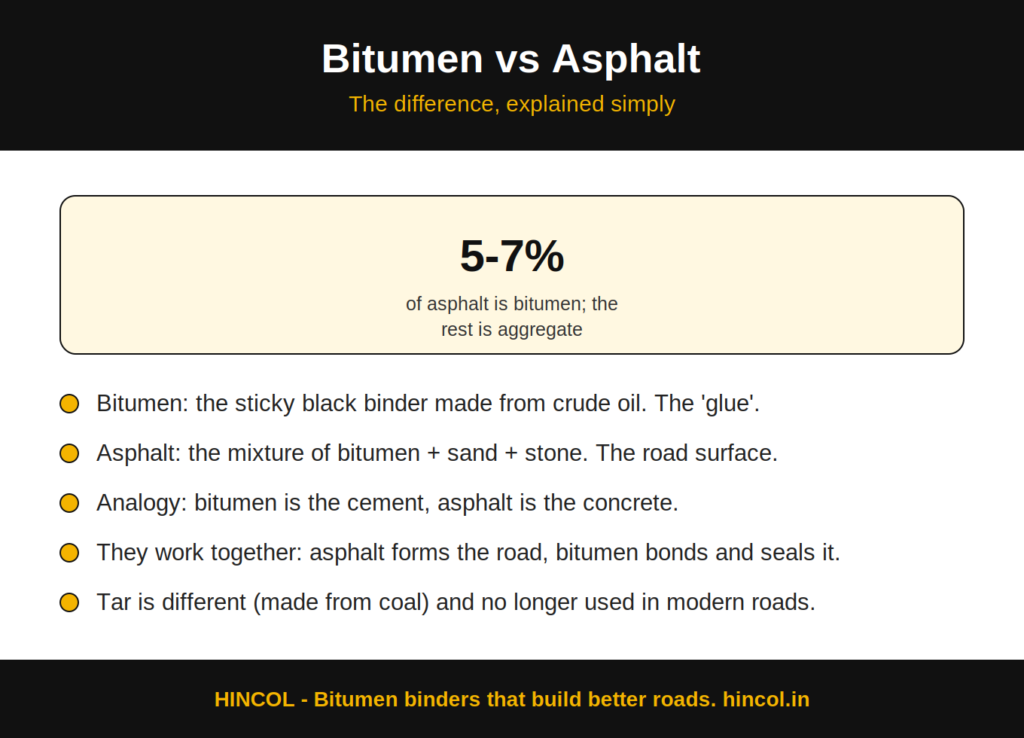
Bitumen is the binder. Asphalt is the mixture that contains it.
Think of baking a cake. Bitumen is like the egg that binds the ingredients. Asphalt is the finished cake, made of many ingredients held together by that binder.
Or think of concrete. Bitumen is the cement (the glue), while asphalt is the concrete (the full mix). Now let us break this down properly.
What Is Bitumen?
Bitumen is a thick, black, sticky material made from crude oil. It is a hydrocarbon binder. On its own, it is semi-solid at room temperature and turns fluid when heated.
Bitumen’s main job is to bind. It coats and glues stone aggregates together. It is also waterproof, which is why it protects roads from rain.
Key points about bitumen:
- It is the liquid binder, the “glue” of a road
- It comes from refining crude oil
- It is waterproof and sticky
- It is used in asphalt, emulsions, and surface treatments
You can learn more in our articles on where bitumen comes from and how bitumen is made.
What Is Asphalt?
Asphalt is a mixture. It is made by combining bitumen with aggregates like sand, gravel, and crushed stone. This mix is usually produced in a plant, heated, and then laid on the road.
In an asphalt mix, bitumen makes up only a small share, often around 5 to 7% by weight. The rest is aggregate. The bitumen binds all those stones into one solid, durable surface.
Key points about asphalt:
- It is a mixture of bitumen plus aggregates
- Bitumen is only a small part of it (around 5 to 7%)
- It is produced in a plant and laid on-site
- It forms the actual road surface you drive on
So when you drive on a smooth black road, you are driving on asphalt, which is held together by bitumen.
Bitumen vs Asphalt: Side-by-Side
| Feature | Bitumen | Asphalt |
| What it is | A binder (glue) | A mixture (binder + aggregate) |
| Made of | Refined crude oil | Bitumen + sand + stone |
| State | Sticky, semi-solid liquid | Solid composite surface |
| Role | Binds the aggregate | Forms the road surface |
| Where used | In asphalt, emulsions, seals | On roads, driveways, car parks |
| Analogy | The cement / the egg | The concrete / the cake |
Why the Confusion Exists
The mix-up happens for a few reasons.
First, the words are used differently around the world. In some countries, people say “asphalt” for the mix. In others, “bitumen road” is common. India uses both terms depending on context.
Second, in North America, bitumen is often called “asphalt” or “asphalt cement.” This makes the confusion worse.
Third, everyday speech is loose. People point at a black road and call it either name without thinking about the technical difference.
The simplest way to stay clear: bitumen is the ingredient, asphalt is the recipe.
How They Work Together on a Road
Bitumen and asphalt are not competitors. They are partners. A road is built using both, in different ways.
- Asphalt layers. The main pavement is asphalt, a bitumen-aggregate mix laid and compacted. This includes the Dense Bituminous Macadam and the Bituminous Concrete wearing course.
- Bitumen coats. Pure bitumen or bitumen emulsion is sprayed as tack coats and prime coats to bond layers and seal the base.
- Surface seals. Bitumen is also used in surface dressing and other seals to protect the road.
So a finished road uses asphalt for the body and bitumen for the bonding and sealing.
What About “Tarmac” and “Tar”?
Two more words add to the confusion: tar and tarmac.
Tar is a different material, made from coal, not crude oil. It was used in old roads but is now avoided because it is harmful to health. Modern roads use bitumen, not tar.
Tarmac (short for “tarmacadam”) is an old term for a road surface. Today most people use it loosely to mean any paved road, but technically it refers to an older construction method.
The bottom line: modern Indian roads are built with bitumen and asphalt, not tar.
Which One Do You Need?
This depends on your project.
- You need bitumen if you are buying the binder itself, for making asphalt, for tack and prime coats, for emulsions, or for surface treatments. Explore our bitumen products.
- You need asphalt if you are laying the actual road surface, which is the bitumen-aggregate mix produced at a plant.
For most buyers dealing with HINCOL, the product is bitumen and bitumen-based materials, the binders and emulsions that go into building and maintaining roads. This includes standard grades, polymer modified bitumen, crumb rubber modified bitumen, and emulsions.
Quality Matters for Both
Whether you focus on the bitumen binder or the finished asphalt, quality is everything. Poor bitumen means poor asphalt, no matter how good the aggregate is.
That is why the quality of the binder is so important. Bitumen must meet Indian standards set by the Bureau of Indian Standards, such as IS 73:2013 for paving grades. A trusted manufacturer tests every batch. Learn more about HINCOL and our commitment to quality.
Conclusion
The difference between bitumen and asphalt is simple once you see it. Bitumen is the sticky binder made from crude oil. Asphalt is the mixture of that binder with aggregates that forms the road surface.
Bitumen is the glue. Asphalt is the finished product. They work together to build every smooth, durable road you drive on.
Next time someone uses the terms interchangeably, you will know exactly what they really mean.
Need quality bitumen for your project?
Explore HINCOL’s full bitumen product range or contact our team for expert advice.