
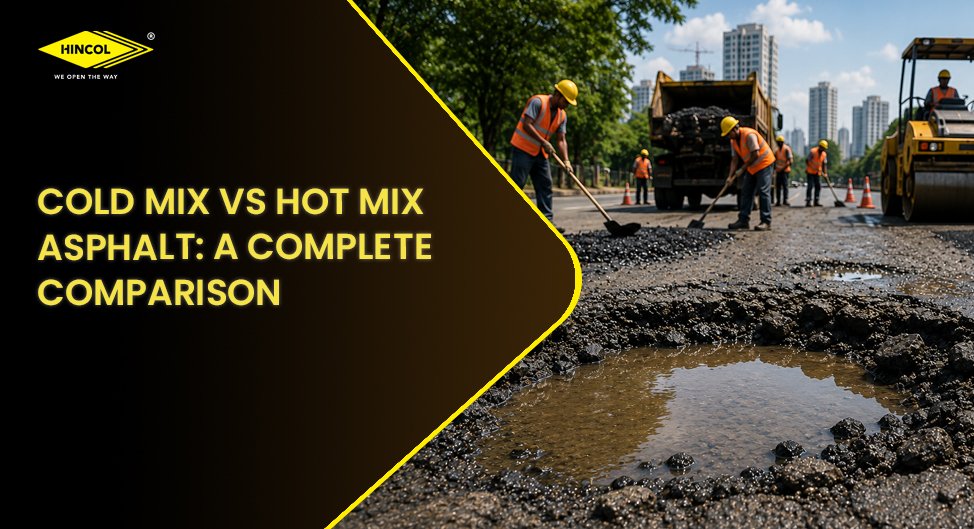
Cold Mix vs Hot Mix Asphalt: A Complete Comparison
When building or repairing a road, one big choice is the mix technology. Cold mix or hot mix? Each has strengths, and the right pick depends on the project.
Hot mix has been the industry standard for decades. Cold mix is newer, greener, and increasingly popular for repairs and rural roads. This guide compares cold mix vs hot mix asphalt so you can decide with confidence.
What Is Hot Mix Asphalt (HMA)?
Hot Mix Asphalt is the traditional road material. Bitumen and aggregate are heated to high temperatures, mixed, laid, and compacted while hot.
Because it is applied hot, HMA forms a very strong, dense, durable surface. It is the material of choice for high-traffic highways and expressways. Learn more in our guide to hot mix asphalt technology.
Key features:
- Heated to around 150 to 180 degrees Celsius
- Produces a strong, long-lasting surface
- Best for new highways and heavy traffic
- Needs dry, warm weather and a hot mix plant
What Is Cold Mix Asphalt?
Cold Mix Asphalt uses bitumen emulsion or cutback bitumen that works at normal temperatures. No heating is needed. The mix is ready to use straight from the bag or stockpile.
Cold mix is ideal for repairs, rural roads, and remote or cold locations. Learn more in our articles on cold mix asphalt technology and what cold mix technology is.
Key features:
- No heating required
- Works in cold and wet weather
- Easy to store and transport
- Best for repairs, patching, and low-traffic roads
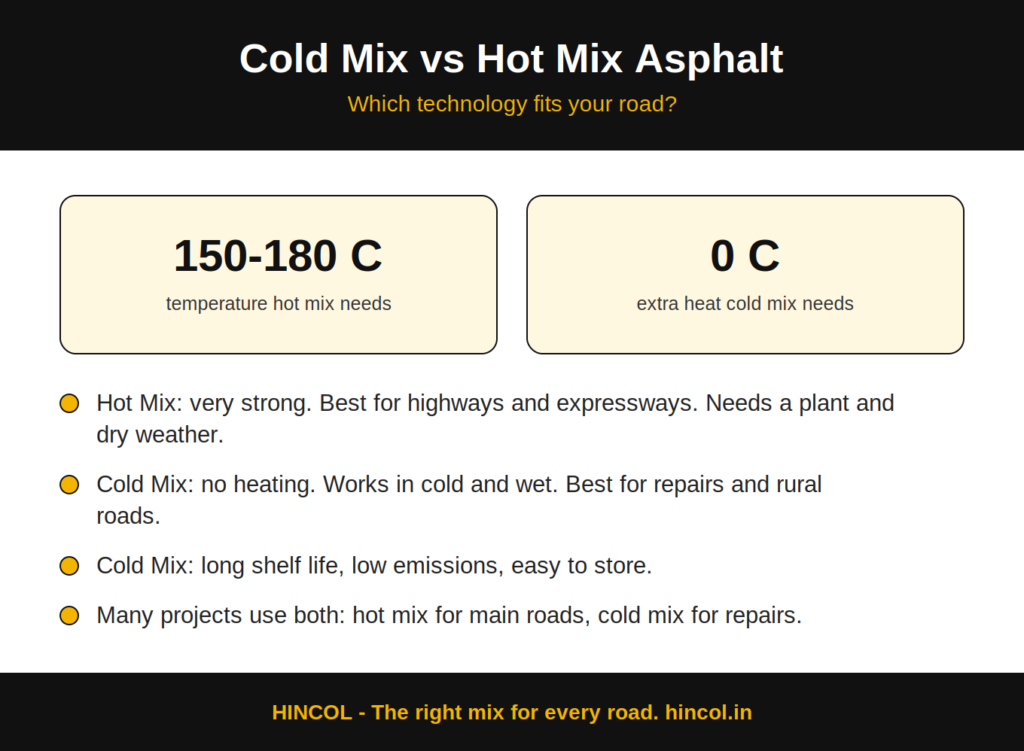
Cold Mix vs Hot Mix: Side-by-Side
| Factor | Cold Mix | Hot Mix |
| Heating | Not needed | Required (150-180 C) |
| Weather | Works in cold/wet | Needs dry, warm |
| Strength | Good, for lighter use | Very high, heavy use |
| Equipment | Minimal | Hot mix plant needed |
| Storage | Long shelf life | Use immediately |
| Emissions | Low | Higher |
| Best for | Repairs, rural roads, remote sites | Highways, expressways |
| Cost | Lower setup | Higher setup |
Advantages of Cold Mix
Cold mix has grown popular for good reasons:
- Convenience. Ready to use, no plant or heating.
- All-weather. Perfect for monsoon and winter repairs.
- Safety. No hot material to handle.
- Eco-friendly. Much lower energy use and emissions.
- Remote access. Ideal where a hot mix plant is far away.
These strengths make cold mix the top choice for pothole repair and maintenance.
Advantages of Hot Mix
Hot mix remains essential for major roads:
- Superior strength. Handles the heaviest traffic loads.
- Durability. Lasts many years on high-traffic roads.
- Smooth finish. Produces the best riding surface.
- Proven track record. The standard for national highways.
For a new expressway, hot mix is usually the right call.
Which One Should You Choose?
The decision comes down to the project:
- Choose hot mix for new highways, expressways, and high-traffic roads where strength and durability are critical, and where dry weather and a plant are available.
- Choose cold mix for repairs, patching, rural and low-traffic roads, cold or wet conditions, and remote sites where heating is impractical.
Many projects use both. Hot mix for the main pavement, cold mix for ongoing repairs and maintenance.
The Sustainability Factor
Cold mix has a clear environmental edge. By skipping the heating step, it slashes fuel use and carbon emissions. As India pushes toward greener infrastructure, cold mix technology is gaining ground for suitable applications. It fits well with the country’s sustainability goals while keeping roads maintained.
Conclusion
Cold mix and hot mix are not rivals so much as partners. Hot mix builds the strong, high-traffic roads that carry the nation. Cold mix keeps those roads maintained and extends connectivity to rural and remote areas, all with lower emissions.
Choosing the right one is about matching the material to the job. For heavy new roads, hot mix. For repairs, cold weather, and remote work, cold mix.
Need the right asphalt solution?
Explore HINCOL’s bitumen products for both technologies, or contact us for guidance.