
Preventive Road Maintenance: Micro Surfacing and Surface Seals Explained
Most road budgets are spent fixing roads after they fail. That is the expensive way. The smart way is preventive maintenance, treating roads before they break down.
Preventive road maintenance extends road life, improves safety, and saves money. Techniques like micro surfacing, surface dressing, and fog seals keep roads healthy for years. This guide explains how they work and when to use them.
What Is Preventive Road Maintenance?
Preventive maintenance means treating a road while it is still in good condition. Instead of waiting for potholes and cracks to spread, you apply a protective treatment early.
Think of it like servicing a car. Regular, small investments prevent big, costly breakdowns. The same logic applies to roads. A thin seal applied at the right time can add years of life.
The core idea is simple. It is far cheaper to maintain a good road than to rebuild a failed one.
Why Preventive Maintenance Saves Money
The economics are compelling. A road left untreated deteriorates slowly at first, then rapidly. Once it reaches poor condition, repair costs multiply.
By treating roads early, authorities:
- Extend road life significantly
- Avoid expensive reconstruction
- Keep roads safer and smoother
- Spread budgets across more roads
Every rupee spent on timely maintenance saves several rupees in future repairs.
Key Preventive Maintenance Techniques
Several proven treatments protect and extend road life. Here are the main ones.
1. Micro Surfacing
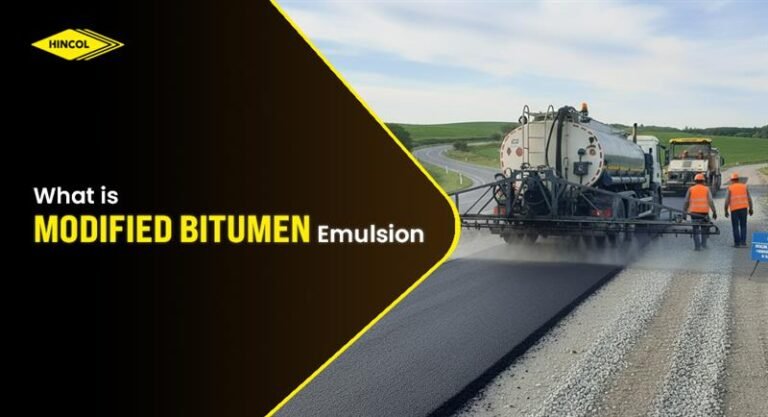
Micro surfacing is a thin layer of polymer-modified bitumen emulsion mixed with fine aggregate. It is applied over an existing road to seal it, restore skid resistance, and correct minor surface defects.
Benefits:
- Seals the surface against water
- Restores grip and safety
- Fast application, quick to reopen
- Extends road life at low cost
It is one of the most effective preventive tools available. Learn more in our detailed article on micro surfacing for road repair and maintenance.
2. Surface Dressing (Chip Seal)
Surface dressing sprays a layer of bitumen emulsion, then covers it with stone chips. It seals cracks, waterproofs the surface, and improves grip. It is widely used on rural and secondary roads.
3. Fog Seal
A fog seal is a light spray of diluted bitumen emulsion. It rejuvenates an ageing, dry surface, seals fine cracks, and slows oxidation. It is quick, cheap, and ideal for roads showing early signs of ageing.
4. Slurry Seal
Slurry seal is a mix of emulsion, fine aggregate, and fillers spread as a thin layer. It fills minor cracks and restores the surface. It suits low to medium-traffic roads.
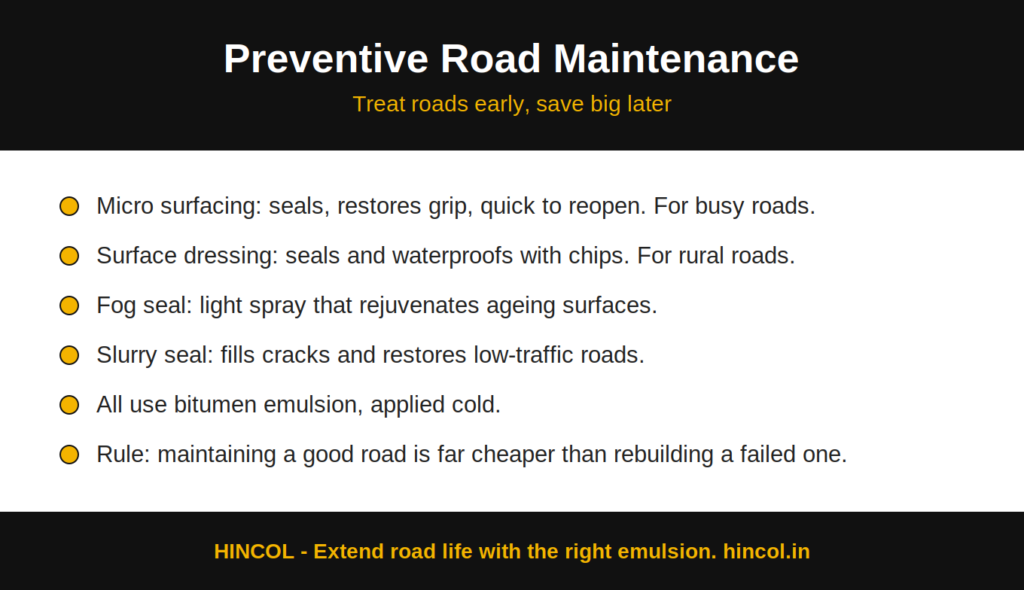
Comparison of Preventive Treatments
| Treatment | What It Does | Best For |
| Micro surfacing | Seals + restores grip + minor levelling | Busy roads needing quick reopening |
| Surface dressing | Seals + waterproofs + grip | Rural and secondary roads |
| Fog seal | Rejuvenates + seals fine cracks | Ageing roads, early treatment |
| Slurry seal | Fills cracks + restores surface | Low to medium traffic roads |
The Common Ingredient: Bitumen Emulsion
Notice that all these treatments rely on bitumen emulsion. Emulsions are perfect for maintenance because they apply cold, coat well, and set reliably. The quality of the emulsion directly affects how well the treatment performs. See our bitumen emulsions range for maintenance-grade products.
When to Apply Preventive Maintenance
Timing is everything. The best window is when a road is still in fair to good condition, before serious cracking or potholes appear. Signs it is time to act:
- Fine surface cracks starting to appear
- The surface looks dry, grey, or worn
- Minor loss of grip or texture
- The road is 3 to 7 years old with no treatment
Waiting too long means the road needs full repair instead, which is far costlier. For roads already damaged, see our pothole repair solutions.
Building a Maintenance Programme
Smart road authorities run planned maintenance programmes rather than reacting to failures. A good programme includes:
- Regular road condition surveys
- A schedule of preventive treatments
- The right material for each road type
- Quality materials from a trusted supplier
This proactive approach keeps entire road networks in good shape within a controlled budget. HINCOL supports such programmes through its services and product range.
Your Post-Monsoon Maintenance Checklist
As the monsoon starts to retreat, road agencies and contractors have a short window to assess damage and plan treatments before the peak construction season begins. A simple checklist helps make the most of it:
1. Survey the network: Walk or drive the roads to record potholes, ravelling, edge breaks, cracks and water stagnation points. Photograph and map each defect.
2. Fix drainage first: Clear blocked side drains, culverts and shoulders. Any preventive treatment will fail quickly if water keeps entering the pavement.
3. Patch potholes quickly: Use cold mix or emulsion-based patching for fast, durable repairs while surfaces are still damp.
4. Seal cracks before they grow: Crack sealing is one of the cheapest treatments available and stops water from reaching the base layers.
5. Schedule surface treatments: Once surfaces are dry and temperatures are stable, plan micro surfacing, slurry seal or surface dressing on sections that are ageing but still structurally sound.
6. Order materials early: Demand for emulsions and bitumen rises sharply after the monsoon. Booking supplies in advance avoids delays when work is ready to start.
Conclusion
Preventive road maintenance is the smartest way to manage roads. Techniques like micro surfacing, surface dressing, fog seal, and slurry seal protect roads early, extend their life, and save large sums on future repairs.
The message for road authorities is clear. Do not wait for roads to fail. Treat them early, with quality materials, and they will serve far longer.
Want to extend your road’s life?
Explore HINCOL’s maintenance products and services or contact us to plan a preventive programme.