
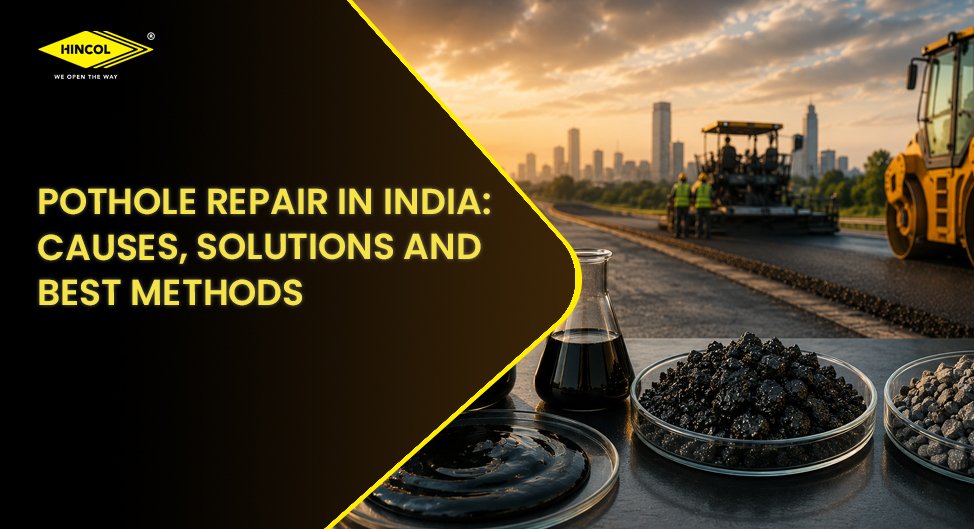
Pothole Repair in India: Causes, Solutions and Best Methods
Potholes are more than an annoyance. They damage vehicles, cause accidents, and cost the economy dearly. Every monsoon, Indian roads sprout thousands of new ones.
The good news is that pothole repair has come a long way. Modern materials and methods can fix potholes faster and make the repair last far longer. This guide explains why potholes form, how to repair them properly, and which solutions work best.
Why Potholes Form on Indian Roads
A pothole does not appear overnight. It is the final stage of a slow breakdown. Understanding the cause is the first step to a lasting repair.
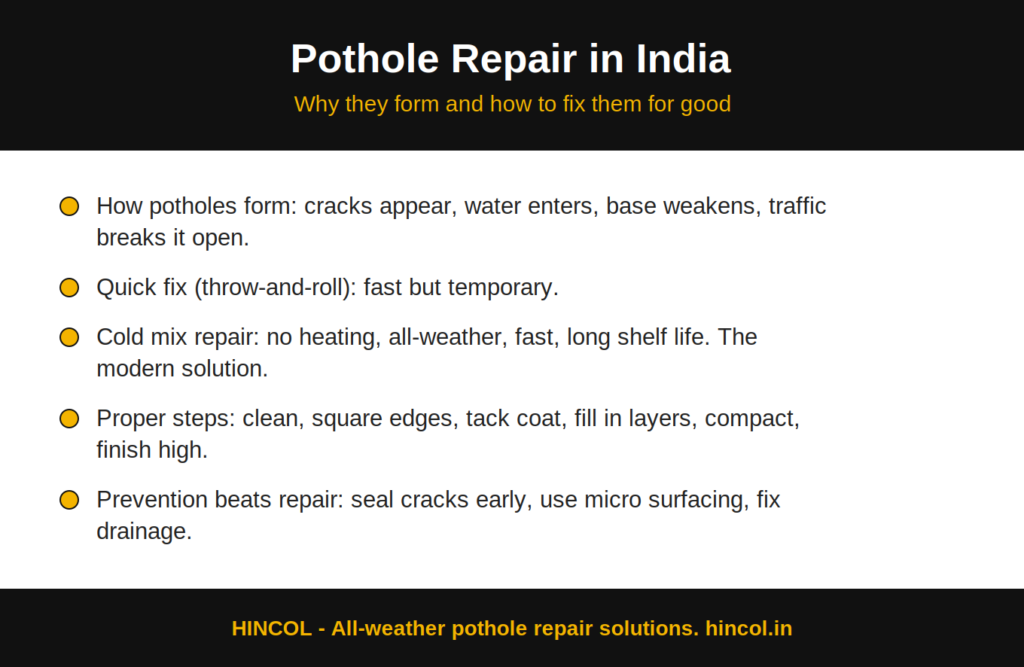
The typical lifecycle looks like this:
- Cracks appear. Traffic, ageing, and temperature cycles create small surface cracks.
- Water enters. Rain seeps through the cracks into the layers below.
- The base weakens. Water softens and washes away the supporting layers.
- Traffic breaks it open. Vehicles pound the weakened spot until the surface collapses.
- A pothole forms. The hole grows quickly as more water and traffic attack it.
India’s heavy monsoon, high traffic, and overloaded trucks accelerate this cycle. We explain it fully in our article on how potholes form on Indian roads.
The Real Cost of Potholes
Potholes carry a serious human and economic cost. Government data reported to Parliament has repeatedly linked thousands of road deaths each year to potholes. Beyond safety, they cause:
- Vehicle damage and higher maintenance bills
- Traffic slowdowns and congestion
- Costly emergency repairs
- Legal and reputational issues for road authorities
This is why fast, durable pothole repair matters so much.
Common Pothole Repair Methods
Not all repairs are equal. Some are quick fixes that fail fast. Others last for years. Here are the main methods.
1. Throw-and-Roll (Quick Fix)
Material is thrown into the hole and compacted by traffic or a roller. It is fast but temporary. Best used only as an emergency measure.
2. Semi-Permanent Repair
The hole is cleaned, squared off, and filled properly with compaction. This lasts much longer than throw-and-roll and suits most repairs.
3. Hot Mix Repair
Hot bituminous mix is used to fill and compact the hole. It is durable but needs heating equipment and dry, warm weather.
4. Cold Mix Repair (Modern Solution)
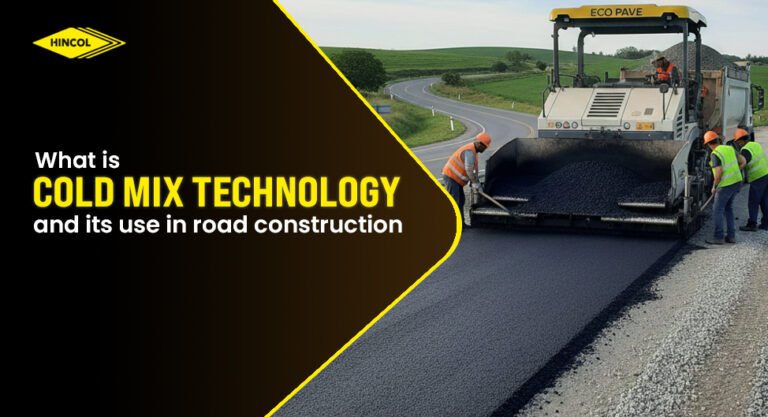
Cold mix uses bitumen emulsion and aggregate that can be applied without heating. It works in wet and cold conditions, sets fast, and stores well. This makes it ideal for quick, all-weather pothole repair. Learn more about our cold mix asphalt technology and what cold mix technology is.
Why Cold Mix Is a Game-Changer for Pothole Repair
Cold mix has become the preferred material for pothole repair in India, and for good reason:
- No heating needed. Ready to use straight from the bag.
- All-weather. Works even during the monsoon and in the cold.
- Fast. Roads reopen almost immediately after repair.
- Long shelf life. Can be stored and kept ready for emergencies.
- Less skilled labour. Simple to apply with minimal equipment.
For municipalities and highway teams that must respond quickly, cold mix is a practical, reliable answer. HINCOL offers dedicated pothole repair solutions built for Indian conditions.
Step-by-Step: How to Repair a Pothole Properly
A good repair follows a clear process:
- Clean the hole. Remove water, debris, and loose material.
- Square the edges. Cut clean, vertical edges around the pothole.
- Apply a tack coat. A thin bitumen emulsion layer helps the new material bond.
- Fill in layers. Add the repair mix in layers, not all at once.
- Compact well. Ram or roll each layer firmly.
- Finish slightly high. Leave the patch a little proud so traffic compacts it level.
Skipping steps, especially cleaning and compaction, is the main reason repairs fail early.
Preventing Potholes in the First Place
The best pothole repair is the one you never need. Prevention is far cheaper than repair. Key measures include:
- Sealing cracks early before water gets in
- Applying preventive treatments like micro surfacing
- Ensuring proper drainage so water flows away from the road
- Using quality bitumen and modified grades on high-stress roads
A well-maintained road rarely develops serious potholes.
The Role of Quality Materials
A repair is only as good as the material used. Poor-quality mix crumbles under the first heavy rain. Quality cold mix, made with the right emulsion and graded aggregate, bonds strongly and lasts. This is where sourcing from a specialist manufacturer pays off. HINCOL formulates its repair products specifically for India’s climate and traffic. Explore our special products for more.
Conclusion
Potholes are a predictable result of cracks, water, and traffic. The key to beating them is a proper repair with the right material, plus prevention through timely maintenance.
Modern cold mix has transformed pothole repair, making it faster, all-weather, and longer-lasting. Combined with good technique and quality materials, it keeps roads safe and smooth.
Need a reliable pothole repair solution?
Explore HINCOL’s pothole repair products or contact our team today.