
Sustainable Road Construction in India: The Eco-Friendly Future
Road building has a big carbon footprint. It uses energy, raw materials, and produces emissions. As India builds roads at record pace, making that process greener has become a national priority.
The good news is that sustainable road construction is no longer a distant idea. Plastic roads, rubberised bitumen, cold mix, and recycled materials are already being used across the country. This guide explores how India is building greener roads and the technologies driving the change.
Why Sustainability in Roads Matters
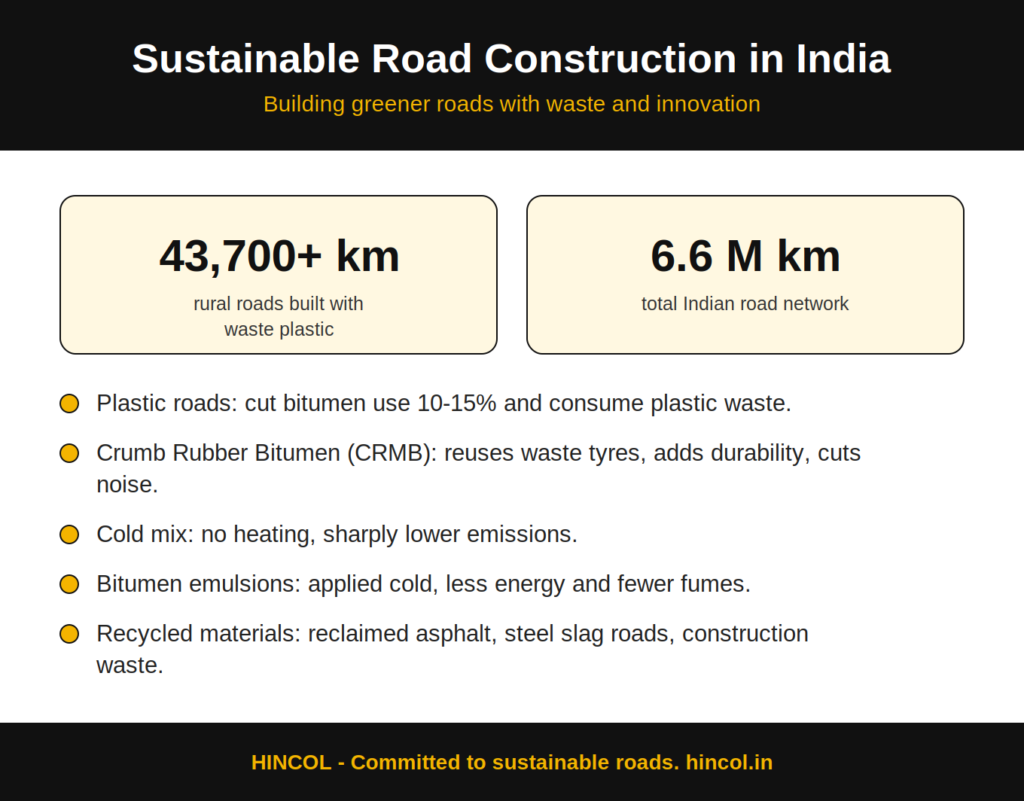
India has the second-largest road network in the world, with over 6.6 million kilometres of roads. Building and maintaining this network consumes enormous resources.
Traditional road building faces several environmental challenges:
- High energy use from heating bitumen and aggregate
- Carbon emissions from hot mix production
- Heavy demand for natural aggregate and fresh bitumen
- Growing volumes of construction and plastic waste
Sustainable methods tackle all of these. They cut emissions, reuse waste, and lower the demand on natural resources, while still building strong roads.
Technology 1: Plastic Roads
One of India’s biggest sustainability success stories is the plastic road. Shredded plastic waste is mixed with hot bitumen. The plastic coats the aggregate, creating a stronger, more water-resistant surface.
The results are impressive. According to the Ministry of Rural Development, more than 43,700 km of rural roads have been built using waste plastic under the Pradhan Mantri Gram Sadak Yojana, with over 56,875 km sanctioned as of mid-2025.
Benefits of plastic roads:
- Consume plastic waste that would otherwise pollute
- Reduce bitumen use by around 10 to 15%
- Better resistance to water and rutting
- Longer road life in many cases
The Indian Roads Congress guideline IRC SP 98 governs the “dry process” used to add plastic. Temperature control is critical, since overheating can degrade the plastic.
Technology 2: Crumb Rubber Modified Bitumen (CRMB)
Waste tyres are another environmental headache. CRMB turns them into a resource. Recycled tyre rubber is ground into crumbs and blended into bitumen.
CRMB delivers durability and reduced road noise, while consuming end-of-life tyres. It is one of the most practical green materials available today. Explore our crumb rubber modified bitumen range. Compared with polymer options in our [PMB vs CRMB guide], CRMB stands out on sustainability.
Technology 3: Cold Mix Technology
Hot mix asphalt needs bitumen and aggregate heated to high temperatures. That burns fuel and releases carbon. Cold mix skips the heating entirely.
By using bitumen emulsion at ambient temperature, cold mix cuts energy use and emissions sharply. It is ideal for repairs, rural roads, and cold or remote areas. Learn more about cold mix asphalt technology.
Technology 4: Bitumen Emulsions
Emulsions are inherently greener than hot bitumen. They are applied cold, use less energy, and produce fewer fumes. From tack coats to surface treatments, emulsions reduce the environmental impact of everyday road work. See our bitumen emulsions page.
Technology 5: Recycled and Reclaimed Materials
India is expanding the use of recycled inputs in roads:
- Reclaimed Asphalt Pavement (RAP). Old road material is milled and reused in new mixes.
- Steel slag roads. CSIR-CRRI built the world’s first steel slag road at Hazira Port, Gujarat.
- Construction waste. Recycled aggregate from demolition is finding use in road layers.
These approaches reduce the need for fresh natural resources and divert waste from landfills.
The Benefits of Going Green
Sustainable road construction delivers on multiple fronts:
- Environmental. Lower emissions, less waste, reduced resource use.
- Economic. Waste materials cut costs, and durable roads reduce repairs.
- Social. Cleaner processes and safer, longer-lasting roads.
- Strategic. Supports India’s climate commitments and circular economy goals.
Green roads are not just good for the planet. They often make financial sense too.
HINCOL’s Commitment to Sustainability
As a leading bitumen products manufacturer, HINCOL takes environmental responsibility seriously. From rubberised bitumen to emulsions and cold mix, our product range supports greener road building. Learn more about our responsible commitment to sustainable practices and community welfare.
The Road Ahead
The future of Indian roads is greener. Expect wider adoption of plastic and rubberised roads, more recycled content, and growing use of cold and warm mix technologies. Government mandates, like the compulsory use of waste plastic on many PMGSY roads, are accelerating the shift.
Sustainability is moving from a nice-to-have to a standard expectation in road construction.
Sustainable Roads in the Monsoon Season
The monsoon is the toughest test for any road. Heavy rain, waterlogging and repeated wet–dry cycles strip bitumen from aggregates and turn small cracks into potholes within days. This is exactly where sustainable technologies show their real value.
Cold mix for rainy-day patching: Cold mix can be laid without heating and works on damp surfaces, so repair crews can fix potholes during breaks in the rain instead of waiting weeks for dry weather. Less heating also means lower fuel use and emissions on site.
Bitumen emulsions for wet conditions: Emulsions bond well even when the surface is not fully dry, making them ideal for tack coats, patching and surface sealing during and just after the monsoon.
Modified binders resist water damage: CRMB and polymer modified bitumen hold aggregates more firmly and resist stripping, which means fewer failures on roads that stay wet for long periods.
Good drainage, proper camber and sealed cracks complete the picture. A road built and maintained with these practices lasts longer, needs fewer repairs and consumes fewer fresh materials over its life – the heart of sustainable road building.
Conclusion
India is proving that big infrastructure and sustainability can go together. Plastic roads, crumb rubber bitumen, cold mix, emulsions, and recycled materials are building roads that are strong, durable, and far kinder to the environment.
For contractors and authorities, choosing greener materials is now both a responsibility and an opportunity.
Want to build greener roads?
Explore HINCOL’s sustainable bitumen products or contact us to learn more.