
Bitumen in Road Construction: The Complete Guide
Every smooth highway you drive on shares one hidden ingredient. That black, sticky binder holding the stones together is bitumen. It is the single most important material in modern road building.
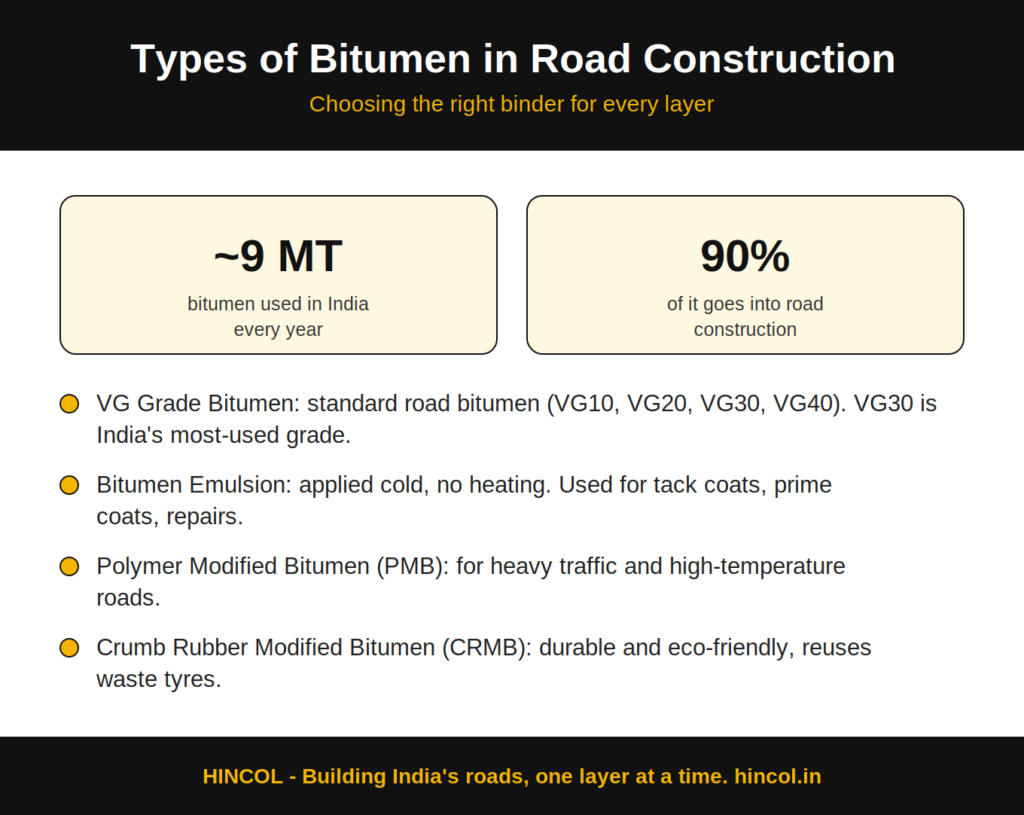
India is one of the largest consumers of bitumen in the world. The country uses close to 9 million tonnes of bitumen every year, and demand keeps climbing as new highways and rural roads get built.
This guide explains everything you need to know about bitumen in road construction. We cover what it is, the different types and grades, where each one is used, and how to choose the right product for a project.
What Is Bitumen?
Bitumen is a dark, semi-solid material made mostly of hydrocarbons. It comes from crude oil through a refining process. At room temperature it is thick and sticky. When heated, it becomes fluid and easy to mix and spread.
In road construction, bitumen works as a binder. It coats the stone aggregates and glues them together into a strong, flexible surface. This surface can handle heavy traffic, resist water, and flex slightly without cracking.
You can read more about its origins in our detailed article on where bitumen comes from, and about production in how bitumen is made.
Why Bitumen Is the Preferred Road Material
Concrete roads exist too. Yet bitumen remains the first choice for most projects. Here is why:
- Lower cost. Bitumen roads are cheaper to build than concrete. NHAI estimates put concrete roads at roughly 10 to 20% more expensive.
- Faster construction. A bitumen road can be laid and opened to traffic quickly.
- Flexibility. Bitumen flexes under load, which suits India’s varied soil and climate.
- Easy repair. Damaged sections can be patched without rebuilding the whole road.
- Recyclable. Old bitumen pavement can be reclaimed and reused.
These advantages make bitumen the backbone of programs like Bharatmala, PM Gati Shakti, and the Pradhan Mantri Gram Sadak Yojana.
The Main Types of Bitumen
Not all bitumen is the same. Different projects need different products. Here are the main categories used in India.
1. Paving Grade (Viscosity Grade) Bitumen
This is standard road bitumen, graded by viscosity as VG10, VG20, VG30, and VG40. VG30 is the most widely used grade for highways across most of India. We explain these in depth in our guide to VG grade bitumen.
2. Bitumen Emulsion
Here bitumen is dispersed in water with an emulsifier. It can be applied cold, without heating. This saves fuel and improves safety. Emulsions are used for tack coats, prime coats, and surface treatments. Learn more on our bitumen emulsions page.
3. Polymer Modified Bitumen (PMB)
Polymers are blended into the bitumen to boost its performance. PMB handles heavy traffic and high temperatures better than plain bitumen. See our polymer modified bitumen page for details.
4. Crumb Rubber Modified Bitumen (CRMB)
Here recycled tyre rubber modifies the bitumen. CRMB is durable, cost-effective, and greener because it reuses waste tyres. Explore our crumb rubber modified bitumen range.
5. Special and Value-Added Products
Beyond the standard range, specialised products handle unique needs like waterproofing, high-stress junctions, and rapid repairs. See our special products line.
How Bitumen Is Used Across a Road
A road is not one single layer. It is built in stages, and bitumen appears in several of them.
- Prime coat. A low-viscosity bitumen sprayed on the granular base to seal and bind it.
- Tack coat. A thin bituminous layer that bonds one pavement layer to the next.
- Dense Bituminous Macadam (DBM). A strong lower binder course.
- Bituminous Concrete (BC). The smooth top wearing course you actually drive on.
- Surface dressing. A protective seal that extends road life.
Each layer may use a different bitumen type or grade. Matching the right product to the right layer is what makes a road last.
Choosing the Right Bitumen for a Project
Selecting bitumen is a technical decision. Several factors guide the choice:
- Traffic volume. Heavy-traffic highways need modified grades like PMB.
- Climate. Hot regions need bitumen that resists softening. Cold regions need flexibility.
- Road type. A national expressway has very different needs from a rural link road.
- Budget. Cost matters, but the cheapest option often costs more over the road’s life.
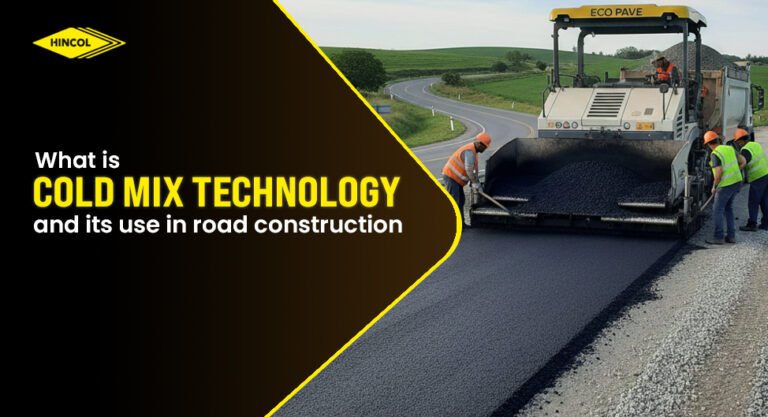
- Application method. Cold-weather or remote sites may favour emulsions or cold mix.
Getting this right avoids common failures like rutting, cracking, and potholes. Getting it wrong wastes the entire road investment.
Common Bitumen Road Failures (and Their Causes)
Understanding failure helps explain why quality matters:
- Rutting. Permanent grooves in the wheel path, often from soft bitumen or overloading.
- Cracking. Thermal or fatigue cracks, worsened by poor-quality binder.
- Stripping. The bitumen separates from the aggregate, usually due to water damage.
- Bleeding. Excess bitumen rises to the surface in hot weather.
- Potholes. The end result when cracks let water in and traffic breaks the surface apart. Read our full explainer on how potholes form on Indian roads.
The Role of Quality and Standards
In India, bitumen must meet standards set by the Bureau of Indian Standards (BIS) and follow specifications from the Ministry of Road Transport and Highways (MoRTH) and the Indian Roads Congress. VG bitumen follows IS 73:2013. Emulsions follow IS 8887.
A trusted manufacturer tests every batch against these standards. This is where a specialist like HINCOL adds value — combining refinery-backed supply with strict quality control. Learn more about HINCOL.
Conclusion
Bitumen is the material that literally holds India’s roads together. From standard VG30 on a national highway to emulsions for rural repairs and modified grades for expressways, the right bitumen makes the difference between a road that lasts a decade and one that fails in a year.
Choosing the correct type and grade, backed by proper testing, is the foundation of durable road construction.
Need the right bitumen for your project?
Explore HINCOL’s full range of bitumen products or contact our team for expert guidance.