
Cold Mix Asphalt Technology: Hidden Engineering Benefits
Cold mix asphalt technology is a game-changer for modern road construction. Unlike traditional hot mix asphalts, cold mix asphalt is produced and laid at ambient temperature, using emulsified bitumen or cutback binders with unheated aggregates. This simple change – eliminating the heating step – brings major engineering benefits that go beyond the obvious cost and fuel savings. In India’s diverse climates and expanding rural networks, cold mix asphalt offers energy-efficient, eco-friendly paving solutions. It slashes fuel use and greenhouse emissions, improves worker safety, and allows recycling of old pavement materials, all while supporting year-round road work.
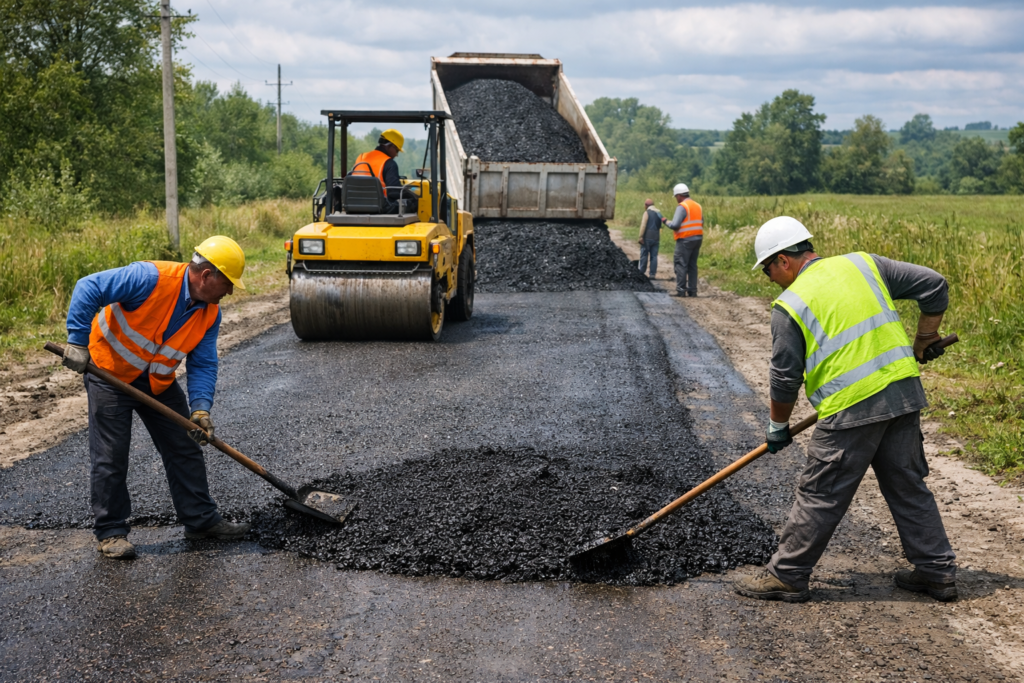
Figure: A rural road paved using cold mix asphalt technology. This ambient-temperature paving process (using bitumen emulsions) reduces energy use and emissions compared to hot-mix asphalt.
Cold mix asphalt’s advantages are especially important for India’s road infrastructure. For example, under India’s PMGSY rural road program, tens of thousands of kilometers have been built with cold mix to reduce carbon footprint. According to the Indian Roads Congress (IRC), cold-mix (bitumen-emulsion) pavements are suitable for low-to-moderate traffic roads, yielding “significant economies, environmental benefits and energy security”. In short, cold mix asphalt technology enables smarter, greener road-building – even on remote rural projects – by harnessing ambient-temperature engineering.
What Is Cold Mix Asphalt Technology?
Cold mix asphalt technology refers to preparing road pavement mix at ambient temperatures, without heating the bitumen or aggregate. In practice, cold mix asphalt (CMA) is produced by mixing aggregates with a bitumen emulsion or cutback binder at room temperature. As IRC guidelines explain, cold mix “are normally produced with unheated aggregates and bitumen emulsion”. In contrast, hot mix asphalt (HMA) requires heating materials above 150°C.
This ambient mixing makes cold mix fundamentally different. The bitumen emulsion consists of tiny bitumen droplets dispersed in water, giving it low viscosity. As a result, the binder coats aggregate at ambient temperatures and gains full strength as the water evaporates. HINCOL notes that bitumen emulsions “can be applied using cold techniques, reducing energy consumption and making road construction more environmentally friendly”. Because no burners or heated trucks are needed, cold mix asphalt eliminates the fumes, risks and fuel use of hot plants.
Despite its simple manufacturing, cold mix asphalt must be carefully designed. Early-generation CMA had lower stability and moisture resistance than hot mix, limiting it to light traffic. However, modern engineering formulations – adding cementitious fillers, polymers or nanomaterials – have dramatically improved strength and durability. For example, IIT Jodhpur researchers boosted cold-mix performance with fly ash, slag and nano-enhanced emulsions, achieving durability close to hot-mix levels. In practice, cold mix asphalt is now specified (via IRC SP-100 guidelines) for a range of maintenance and construction applications in India.
Key Benefits of Cold Mix Asphalt Technology
Cold mix asphalt offers many hidden engineering benefits beyond the obvious fuel savings. Its ambient-temperature process unlocks advantages in cost, safety, logistics and sustainability. Key benefits include:
- Energy & Emission Savings: By eliminating heating, cold mix dramatically cuts fuel consumption and greenhouse gases. Studies show cold-mix pavements reduce CO₂ emissions by 40–50% compared to hot mix. In practical terms, cold-mix roads require far less asphalt plant fuel – sometimes half or less – and virtually no particulate or sulfur emissions during paving. HINCOL notes that cold techniques “reducing energy use” lead to greener construction. Overall, cold mix asphalt directly lowers carbon footprint and supports India’s sustainability goals.
- Lower Cost & Simple Production: Preparing asphalt at ambient temperature removes the need for expensive dryers, burners and specialized hot mix plants. Fuel costs and plant maintenance drop sharply. Cold mix can often be mixed on-site with basic equipment, as its “lower viscosity requires less energy” and “eliminates hazards” of hot asphalt. This makes cold mix especially cost-effective for rural roads, repairs and small projects. In fact, one construction guide emphasizes cold mix as a “low-cost alternative” for patchwork and rural paving.
- All-Weather & Remote Use: Cold mix asphalt can be placed in cooler, wetter, or off-season conditions where hot-mix plants can’t operate. Since it uses emulsions that can coat damp aggregate, cold mix works even on slightly wet surfaces. This flexibility allows road crews to work into the monsoon or winter shoulder season. It’s ideal for remote or mountainous regions – where insulated hot-mix trucks cannot reach – enabling faster rural connectivity. The cold mix process thus extends the paving “window” beyond what hot mix allows.
- Production Flexibility: Cold mix can be produced, stockpiled and transported in advance of paving. Unlike hot mix, it does not harden on cooling. Agencies can prepare large batches weeks ahead, then lay them as needed. This stockpiling means no rush once the mix is on site; crews have more working time. Cold mix “can be stored for several months without losing effectiveness”, and transported without special heated trucks. Such flexibility reduces on-site delays and waste, making project scheduling easier.
- Recycling & Resource Efficiency: Cold mix formulations readily incorporate reclaimed asphalt pavement (RAP) and other recycled materials. Because emulsified binders adhere well to aged binder, cold mix can use very high RAP percentages. The “reuse of old asphalt materials” in cold mixes significantly reduces waste and conserves resources. For example, India’s PMGSY used cold mix and other green methods to pave over 47,000 km in 2017–18, largely by recycling. Allowing fly ash, plastics or recycled concrete as fillers further boosts sustainability and often improves strength. Modern research even shows cold mixes with 100% RAP achieving performance comparable to new asphalt.
- Safer Work Environment: Cold mix construction is much safer for crews. There is no handling of hot bitumen at 160°C, so burn and fire risks vanish. Workers aren’t exposed to asphalt fumes or steam from hot aggregates. This creates a healthier, more comfortable paving environment. In fact, safety concerns (worker health, burns) were a key driver behind cold-mix adoption in road guidelines.
- Durability with Additives: Although early cold mixes were weaker than hot mixes, modern engineering additives overcome these limits. Adding small percentages of cementitious fillers or nanomaterials (like nano-silica) can double the Marshall stability and moisture resistance of cold mix. Such innovations “significantly improved the mechanical stability” of cold mix asphalt. As a result, today’s cold mixes are strong and long-lasting for low- to medium-traffic roads, providing performance closer to hot-mix pavements.
The combined effect of these benefits is powerful. Cold mix asphalt essentially provides hot-mix performance without the heat. It slashes fuel use and cost, allows scheduling flexibility, and makes use of waste materials. These engineering advantages – while less obvious than “it’s cheaper” – are transforming how roads are built, especially in rural India.
Engineering Innovations and Performance
Recent research and development have pushed cold mix technology even further. By improving the chemistry of emulsions and mix designs, engineers are enhancing cold mix strength and durability. For instance, IIT Jodhpur showed that mixing in industrial byproducts (fly ash, slag, stone waste) and nano-modified emulsions dramatically improves cold mix performance. These nano-additives create a stronger bond and better moisture resistance, in some cases achieving “durability levels comparable to traditional hot mix asphalt”.
Similarly, new binder technologies (polymer-modified or bio-binders) are being tested to give cold mixes the toughness of hot mix. The Indian Roads Congress and research institutes continuously update mix design methods to ensure cold mix pavements meet traffic demands. The result is that many of cold mix’s old drawbacks – slow curing, lower strength – are being solved by smart engineering. The technology is still most common on low-volume and maintenance projects, but the performance gap with hot mix is closing.
Cold Mix Asphalt Technology in India
India’s road network (over 5 million km total) relies heavily on cost-effective paving methods. Cold mix asphalt technology has become an important tool for sustainable road programs. For example, the Pradhan Mantri Gram Sadak Yojana (PMGSY) – India’s flagship rural roads scheme – explicitly promotes cold mix methods. In 2017–18 alone, 47,447 km of rural roads were built using green techniques including cold mix and recycling. According to the latest data, by March 2024 over 23,000 km of PMGSY roads used cold mix technology. This shows the scale of adoption.
Official guidelines reflect this trend. The IRC’s Special Publication on cold mix (IRC SP 100) notes that bitumen-emulsion cold mixes are suitable for low- to moderate-traffic roads – exactly where India often needs durable rural roads. These guidelines list many success stories of cold mix in villages, hilly regions and during the monsoon. They also point out that cold mix construction means “no additional heating” of bitumen and aggregates, reinforcing its lower environmental impact. In practice, state highway authorities and the NHAI have begun mandating recycled-content cold mixes and emulsions in appropriate projects (for example, allowing 20–30% RAP in mixes).
For young engineers and aspirants (even UPSC candidates), cold mix asphalt is now a relevant topic. Exams and discussions on sustainable infrastructure often highlight cold mix asphalt technology as an eco-friendly innovation for India’s roads. Knowing its benefits – like reduced carbon footprint, use of local materials, and all-season paving – is important for understanding modern highway development. The acronym CMA (Cold Mix Asphalt) even appears in government manuals and training videos (for instance, MoRD’s PMGSY series on cold mix technology).
In summary, cold mix asphalt technology offers a hidden toolbox of engineering advantages: energy savings, flexibility, recycling, safety, and ongoing innovation. As India pushes for greener, more resilient infrastructure, cold mix is poised to grow in importance. Agencies like HINCOL are developing customized cold-mix solutions (see HINCOL’s pages on bitumen emulsions and cold mix technology) that capitalize on these benefits. By combining ambient-temperature mixing with advanced additives and recycled materials, cold mix asphalt is helping to build roads that are both durable and sustainable for India’s future.
Read also: – What Is Bitumen Emulsion? A Complete Guide to Types and Uses
Sources: Principles and data from Indian Roads Congress guidelines, HINCOL technical briefs, and recent industry studies highlighting cold mix performance and environmental benefits. These illustrate the engineering virtues of cold mix asphalt technology.